
- Can you tell us about your journey from studying Arabic and Comparative Literature to working in communications for arts and culture institutions?
It was not expected or planned at all! My final year and a half at university took place during the pandemic, totally remote. After I graduated, I had the time and space to reflect and get in touch with myself. I started practising yoga every day, journaling, reconnecting with the creative parts of myself which helped me to figure out what excited me. I started reading books I wanted to read again, not just compulsory ones for my courses, and I created an Instagram page to share my reflections, which gradually turned into me writing about the arts and culture more broadly.
All of this led me to working in the field, and communication is something that has always come naturally to me, having studied multiple languages throughout my life, tutoring kids in English language and literature for seven years, and, of course, my university degree.
- How has your Pakistani heritage influenced your creative work, especially in a multicultural city like Dubai?
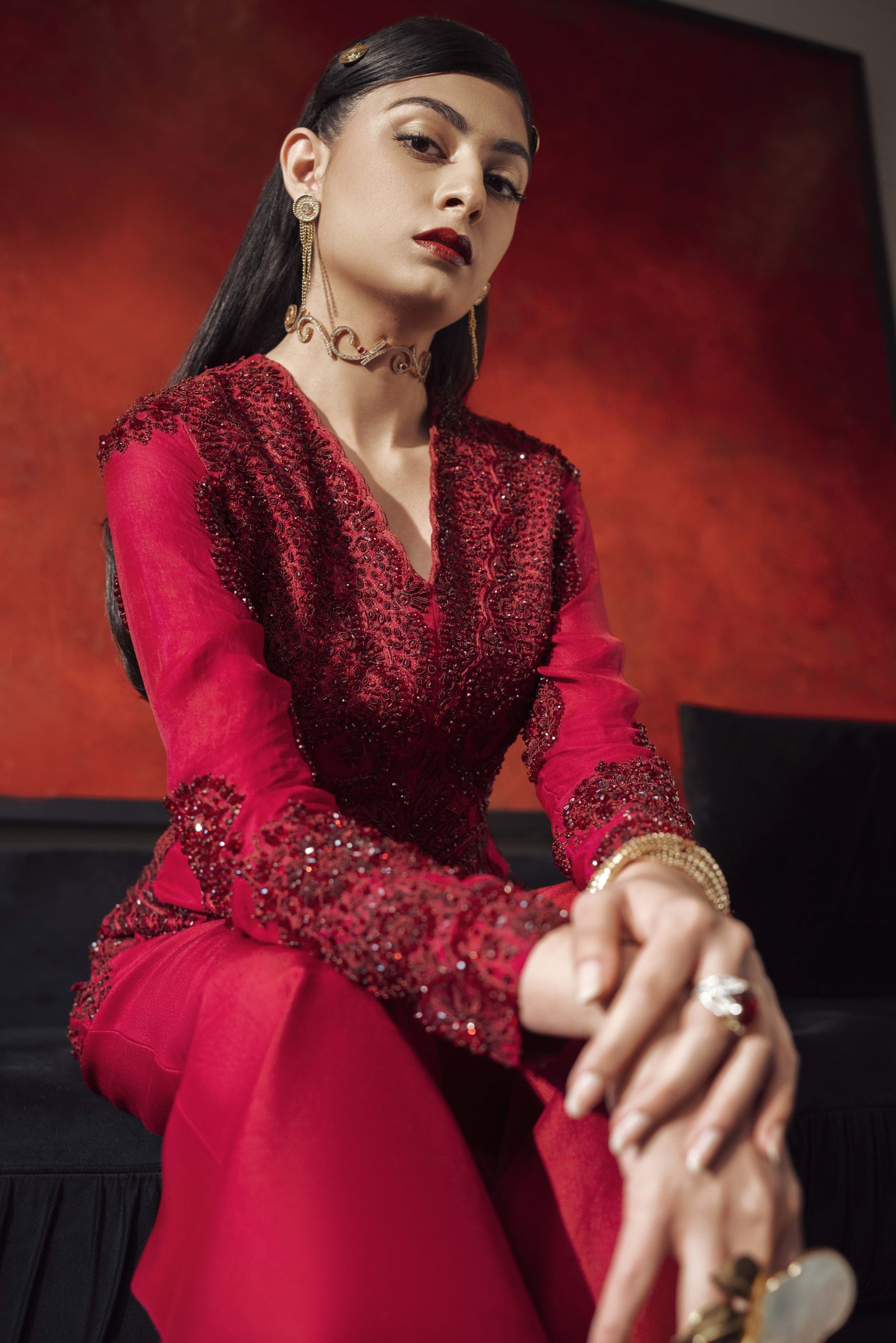
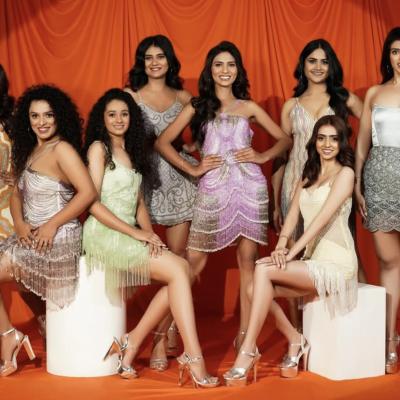
One thing that I love so much about Pakistani culture is how hospitality and consideration for others is so engrained; I’ve learned kindness goes a long way, and is universally understood in all cultures. Also, the creativity I’ve seen in Pakistan, like in the designs and embroidery of the clothes I’m wearing [in the shoot], is like no other in the world. Growing up around this has definitely inspired me to always seek beauty such as this.
- What inspired you to delve into contemporary art of the Middle East and North Africa, and how do you see it influencing your own creative expression?
I’ve always loved art, creating, engaging with and studying it, but especially when I was in university I became more aware of how so many canons we’re exposed to (literary, artistic, musical) are centred around Europe or the West. Most of us in the Global South could easily identify the Mona Lisa but could we just as easily identify an artwork of renowned Iraqi artist Dia Azzawi, for example?
Coming back to live and work in the region made me realise how unaware I was of its artistic histories, so it was borne out of wanting to educate myself on the topic. I felt especially drawn to art from the Middle East as the limited work I had been exposed to resonated with me much more.
I still vividly remember an exhibition I visited when 15 of the Iraqi artist Sadik Kwaish Alfraji, ‘Ali’s Boat’, because it was the first time I had been so deeply moved by works of art. To me, so much of the art from this part of the world comes from the soul and engages on the collective level rather than focusing on just the individual; I feel continually inspired by this to do the same in whatever I create.
- In what ways do you believe art can be a tool for exploring and expressing identity, both personally and within society?
I think people have written full theses on this topic but I can give one example. Today, I think we are all acutely aware of the struggles that Palestinians face in trying to assert their right to exist on their homeland. People can lay out the facts, make clear, structured arguments but, to me, nothing can have the same effect as that which is communicated artistically.
It is infinitely more powerful when Mahmoud Darwish, whose poetry was the subject of my MA dissertation, writes ‘On this land, there is that which deserves life.’ Through the boundless medium of poetry, Darwish expresses an emotional experience that surpasses worldly borders between individuals, ethnic, social, political groups, that can be understood universally: I exist. My people exist. The plants and animals on this land exist. They have the right to do so. We share in the same right to life that every other living being in this world has.
- Could you share a memorable experience or project from your time working with institutions like the Kiran Nadar Museum of Art or the Saudi Ministry of Culture?
One project that I am so grateful to be a part of was a photo walk in AlUla, an incredible governate in northwest Saudi Arabia, accompanying five talented Khaleeji photographers as they captured parts of the region. It’s a stunning part of the country so I loved exploring its variety of natural landscapes but the experience was made extra special by sharing it with warm, like-minded, creative individuals and it was so interesting to see how unique each of our perspectives of the same places were.
- How do you balance your independent writing projects with your professional work in communications?
These days, like an elephant walking a tightrope – not very well. I wish I had a better structure in place but when the stars align, and inspiration strikes and I have some time to myself, I jump on the opportunity. There are times also where what I work on professionally overlaps with what I’d like to explore independently so it’s always interesting to see how those streams can feed into one another,
- What advice would you give to aspiring creatives who are interested in pursuing a career that blends language, literature, and storytelling with art and culture?
I’m sure there are far more qualified people than me to give advice; what has worked for me, though, is to not look too far down the line, and to just focus on taking the next step in front of me. And, if something makes you excited or sparks something inside you, even if you don’t understand it or see the what the purpose of it will be, do it.
- How do you envision your creative journey evolving in the future, considering your passion for exploring identity through various art forms?
Applying that exploration to myself! I have always been creative; when I was growing up, almost every month I would pick up a new creative skill but I prevented myself from pursuing any of these skills – music, fine art, writing – seriously, out of fear. Fear to put myself out there, fear of judgment, fear of failure. I feel I’ve come a long way since then but I want to continue to dismantle limiting beliefs and maybe realise a few more of my childhood dreams 😊
Instagram | https://www.instagram.com/anushe.samee/ | https://www.instagram.com/withanaccentaigu/


1 Comment